


Introduction to AI Robots
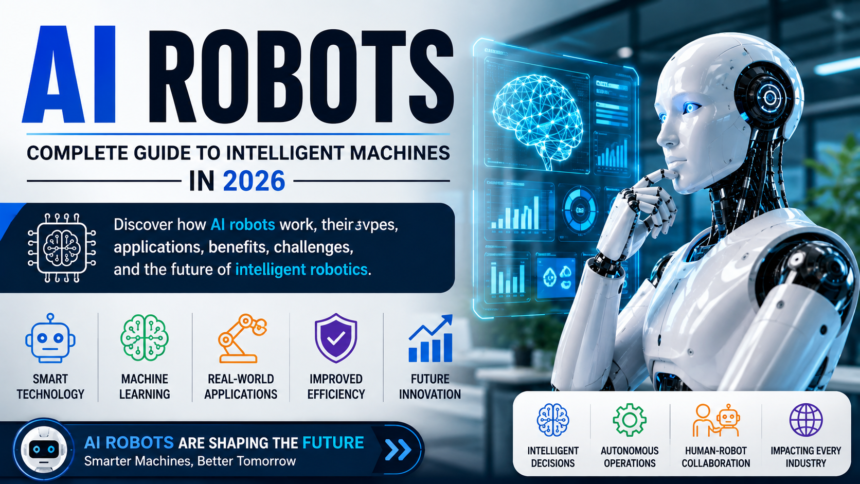
Artificial Intelligence (AI) robots are transforming the way people live and work. Unlike traditional robots that simply follow pre-programmed instructions, AI robots can analyze information, learn from experience, make decisions, and adapt to changing environments. These intelligent machines combine robotics with advanced AI technologies such as machine learning, computer vision, and natural language processing to perform tasks more efficiently and accurately.
Today, AI robots are used in manufacturing, healthcare, education, agriculture, logistics, customer service, and even homes. From robotic vacuum cleaners and warehouse automation systems to humanoid assistants and surgical robots, AI-powered machines are becoming an essential part of modern life. Businesses use them to improve productivity, reduce operational costs, and enhance workplace safety, while consumers benefit from smarter and more personalized experiences.
As AI technology continues to evolve, robots are becoming more capable of understanding human behavior, recognizing objects, and interacting naturally with people. Experts predict that AI robots will play an even greater role in industries over the next decade, helping solve complex problems and supporting innovation across the globe.
This guide explains what AI robots are, how they work, their key technologies, applications, benefits, challenges, and what the future holds for intelligent robotics.
Fast Info Table
| Feature | Details |
|---|---|
| Keyword | AI Robots |
| Technology | Artificial Intelligence + Robotics |
| Purpose | Automate tasks and make intelligent decisions |
| Core Technologies | Machine Learning, Computer Vision, NLP, Sensors |
| Industries | Healthcare, Manufacturing, Logistics, Agriculture, Retail, Education |
| Common Examples | Humanoid robots, Robot vacuums, Warehouse robots, Surgical robots |
| Main Benefits | Higher efficiency, improved accuracy, lower costs, enhanced safety |
| Limitations | High cost, ethical concerns, data privacy, maintenance |
| Future Trend | Autonomous robots with advanced reasoning and human collaboration |
What Are AI Robots?
AI robots are intelligent machines that combine physical robotics with artificial intelligence to perform tasks that normally require human thinking or decision-making. Unlike conventional robots that follow fixed programming, AI robots can learn from data, recognize patterns, understand their surroundings, and improve their performance over time.
An AI robot typically includes sensors, cameras, processors, AI software, and mechanical components. The sensors collect information from the environment, while AI algorithms analyze that information and determine the most appropriate action. This enables the robot to respond to changing situations without requiring constant human intervention.
For example, an AI-powered warehouse robot can identify products, avoid obstacles, calculate the fastest delivery route, and adjust its movements in real time. Similarly, healthcare robots assist doctors by analyzing medical data, supporting surgeries, and monitoring patients with remarkable precision.
Modern AI robots also use technologies such as natural language processing to understand voice commands and computer vision to recognize faces, objects, and locations. These capabilities allow them to interact more naturally with people and perform increasingly complex tasks.
As artificial intelligence continues to improve, AI robots are becoming smarter, more autonomous, and more valuable across nearly every industry, helping businesses increase productivity while improving accuracy, efficiency, and safety.
How Do AI Robots Work?
AI robots work by combining advanced hardware with artificial intelligence software to sense, analyze, decide, and act. Their operation follows a continuous cycle that enables them to interact intelligently with their surroundings instead of simply following fixed instructions.
The process begins with data collection. AI robots use sensors, cameras, microphones, LiDAR, GPS, and other devices to gather real-time information from the environment. This data is then sent to an onboard computer or cloud-based AI system for processing.
Next, AI algorithms analyze the collected information. Machine learning models identify patterns, computer vision recognizes objects and people, while natural language processing allows robots to understand spoken or written commands. Based on this analysis, the robot determines the most appropriate action.
After making a decision, the robot sends instructions to its motors, robotic arms, wheels, or other mechanical components. These actuators perform physical actions such as moving, lifting objects, navigating obstacles, or interacting with humans.
Many AI robots also include a learning phase. By analyzing previous experiences and feedback, they improve their performance over time without requiring complete reprogramming. This continuous learning enables them to adapt to new environments, recognize unfamiliar situations, and complete tasks more efficiently.
Cloud computing, edge computing, and high-performance processors further enhance AI robots by enabling faster decision-making, real-time communication, and access to large datasets. Together, these technologies allow modern AI robots to operate with impressive speed, accuracy, and autonomy.
Key Technologies Behind AI Robots
The intelligence of modern AI robots comes from several advanced technologies working together. Each technology plays a unique role in helping robots perceive their surroundings, make decisions, and perform complex tasks.
Machine Learning (ML) allows robots to learn from data and improve their performance over time instead of relying only on fixed programming. The more data they process, the better their decision-making becomes.
Computer Vision enables AI robots to recognize faces, objects, text, and environments using cameras and image-processing algorithms. This technology is essential for navigation, quality inspection, and autonomous movement.
Natural Language Processing (NLP) helps robots understand and respond to human language. It allows voice-controlled assistants and customer service robots to communicate naturally with users.
Sensors and IoT devices provide real-time information about temperature, movement, distance, pressure, and surroundings. This data helps robots safely interact with people and objects.
Deep Learning improves pattern recognition by using neural networks capable of analyzing massive datasets. It supports facial recognition, speech understanding, and advanced automation.
Cloud computing and edge computing also play important roles by providing powerful processing capabilities, faster responses, secure data storage, and continuous software updates. Together, these technologies make AI robots more intelligent, adaptable, and capable of performing tasks across numerous industries.
Types of AI Robots
AI robots come in various forms, each designed to perform specific tasks across different industries. Their capabilities depend on the combination of artificial intelligence, sensors, and mechanical design.
Humanoid Robots are built to resemble humans in appearance or movement. They can recognize faces, understand speech, answer questions, and assist customers in public places, hospitals, and research facilities.
Industrial AI Robots are commonly used in manufacturing plants. They assemble products, perform precision welding, inspect quality, package goods, and handle repetitive tasks with exceptional speed and accuracy. AI enables them to adapt to changing production requirements.
Service Robots assist people in everyday environments such as hotels, restaurants, airports, and shopping centers. These robots can deliver items, provide directions, clean buildings, or interact with customers using voice recognition.
Healthcare Robots support doctors and nurses by assisting during surgeries, delivering medications, disinfecting hospitals, monitoring patients, and providing rehabilitation therapy. Their precision helps improve patient outcomes and reduce human error.
Autonomous Mobile Robots (AMRs) navigate warehouses, factories, and distribution centers without fixed paths. Using AI, sensors, and mapping technology, they transport goods while safely avoiding obstacles.
Agricultural Robots help farmers with planting, harvesting, crop monitoring, irrigation, and weed control. AI allows them to analyze crop health and improve farming efficiency.
Domestic AI Robots, including robotic vacuum cleaners and home assistants, automate household tasks, provide security monitoring, and respond to voice commands, making daily life more convenient for homeowners.
Top Applications of AI Robots
The adoption of AI robots is expanding rapidly as organizations seek smarter ways to automate operations and improve productivity. Their ability to learn, adapt, and make decisions makes them valuable across numerous industries.
In manufacturing, AI robots assemble products, inspect quality, package items, and perform hazardous tasks. They increase production speed while maintaining consistent quality and reducing workplace accidents.
The healthcare industry uses AI robots for robotic-assisted surgery, patient monitoring, hospital disinfection, laboratory automation, and elderly care. These systems help medical professionals deliver more accurate and efficient treatment.
In logistics and warehousing, autonomous robots transport inventory, sort packages, manage storage, and optimize delivery routes. Major distribution centers rely on AI robots to accelerate order fulfillment and reduce operational costs.
The agriculture sector benefits from AI robots that monitor crop health, detect plant diseases, perform precision spraying, harvest fruits, and automate irrigation systems. These technologies help farmers improve yields while minimizing resource waste.
Retail businesses use AI robots for inventory management, shelf monitoring, customer assistance, and automated checkout experiences. Intelligent robots can also analyze shopping patterns to improve store operations.
In education, AI-powered robots support interactive learning, teach programming, assist students with special needs, and provide personalized educational experiences.
AI robots are also widely used in security and defense, where they patrol facilities, detect suspicious activities, inspect dangerous environments, and assist emergency response teams. As AI technology advances, new applications continue to emerge, making intelligent robots an essential part of modern industries and everyday life.
Benefits of AI Robots
AI robots offer numerous advantages that help businesses, organizations, and individuals improve efficiency and productivity. One of their greatest benefits is automation. They can perform repetitive, time-consuming tasks continuously without fatigue, allowing human workers to focus on more creative and strategic responsibilities.
Another major advantage is accuracy. AI robots minimize human errors by following data-driven decision-making processes and executing tasks with high precision. This is especially valuable in industries such as healthcare, manufacturing, and logistics, where even small mistakes can have significant consequences.
AI robots also improve workplace safety by handling hazardous jobs such as working with toxic materials, inspecting dangerous environments, or lifting heavy objects. This reduces the risk of injuries and creates a safer working environment.
Businesses benefit from cost savings over time because AI robots increase productivity, reduce waste, and optimize resource utilization. Many robots also operate around the clock, improving operational efficiency and shortening production cycles.
Additionally, AI robots can process vast amounts of data in real time, enabling faster decision-making and better customer service. As artificial intelligence continues to evolve, these intelligent machines will become even more capable, helping industries innovate while improving overall quality, reliability, and performance.
Challenges and Limitations of AI Robots
Despite their impressive capabilities, AI robots also face several challenges and limitations. One of the biggest obstacles is the high initial investment required for purchasing, developing, and maintaining advanced robotic systems. Small businesses may find these costs difficult to justify.
Another concern is job displacement. As AI robots automate repetitive tasks, certain jobs may become less dependent on human labor. However, many experts believe new technology-related careers will also emerge as automation expands.
Data privacy and cybersecurity are important issues because AI robots often collect and process sensitive information. Without strong security measures, these systems could become targets for cyberattacks or unauthorized access.
AI robots also depend heavily on high-quality data. If they receive incomplete or biased information, their decisions may become inaccurate or unfair. Regular monitoring and updates are essential to maintain reliable performance.
In addition, today’s AI robots still struggle with tasks requiring emotional intelligence, creativity, and complex human judgment. Unexpected situations can also reduce their effectiveness if they have not been trained for similar scenarios.
Addressing these technical, ethical, and regulatory challenges will be essential to ensure AI robots are developed responsibly and used safely across industries.
Best AI Robots in 2026
The AI robotics industry continues to evolve rapidly, with several intelligent robots leading innovation across different sectors. These advanced machines demonstrate how artificial intelligence is transforming both commercial and personal applications.
Figure 02 is one of the most advanced humanoid AI robots, designed to perform workplace tasks, understand voice commands, and collaborate safely with humans. Its improved reasoning and mobility make it suitable for manufacturing and logistics environments.
Tesla Optimus continues to gain attention as a general-purpose humanoid robot capable of handling repetitive industrial and household tasks. Tesla aims to use Optimus to improve productivity while reducing the need for dangerous manual labor.
Agility Robotics’ Digit is widely used in warehouses and distribution centers. It can carry packages, navigate complex environments, and automate material handling using AI-powered perception and movement.
Boston Dynamics Atlas remains one of the world’s most impressive research robots. Its advanced balance, agility, and computer vision enable it to perform highly dynamic movements and navigate challenging environments.
In healthcare, Moxi assists hospital staff by transporting medical supplies, delivering equipment, and completing routine support tasks, allowing healthcare professionals to spend more time with patients.
These AI robots demonstrate the rapid progress of intelligent robotics. As artificial intelligence, computer vision, and machine learning continue to improve, future robots will become more autonomous, efficient, and capable of supporting industries ranging from healthcare and manufacturing to logistics, education, and home assistance.
AI Robots vs Traditional Robots
Although both AI robots and traditional robots automate tasks, they differ significantly in intelligence, flexibility, and decision-making capabilities. Traditional robots operate using fixed programming and predefined instructions. They perform repetitive tasks with high accuracy but cannot adapt to unexpected situations without being manually reprogrammed.
AI robots, on the other hand, use artificial intelligence technologies such as machine learning, computer vision, and natural language processing to learn from data, analyze their environment, and make informed decisions. They can recognize objects, understand voice commands, avoid obstacles, and improve their performance over time through continuous learning.
Traditional robots are commonly used in structured environments like assembly lines, where tasks rarely change. AI robots are designed for dynamic environments such as hospitals, warehouses, customer service centers, and autonomous vehicles, where conditions constantly evolve.
Another major difference is adaptability. While traditional robots repeat the same actions with little variation, AI robots can adjust their behavior based on new information and real-time feedback. This makes them more suitable for complex applications that require problem-solving and interaction with humans.
As artificial intelligence continues to advance, AI robots are expected to replace many conventional robotic systems, offering greater efficiency, flexibility, and autonomy across industries.
The Future of AI Robots
The future of AI robots looks exceptionally promising as artificial intelligence continues to evolve at a rapid pace. Over the coming years, robots will become smarter, faster, and more capable of working alongside humans in nearly every industry. Advances in machine learning, computer vision, edge computing, and large language models will allow robots to make more accurate decisions and adapt to unfamiliar situations with minimal human assistance.
Future AI robots will play an increasingly important role in healthcare by assisting with surgeries, patient care, rehabilitation, and elderly support. In manufacturing and logistics, autonomous robots will improve productivity through intelligent planning, predictive maintenance, and real-time collaboration with human workers.
Home robotics is also expected to grow significantly. AI-powered assistants may handle household chores, monitor home security, assist elderly family members, and provide personalized support through natural conversations and smart automation.
As robotic technology becomes more affordable, small and medium-sized businesses will gain access to intelligent automation previously available only to large organizations. This will increase efficiency and competitiveness across many sectors.
However, the future of AI robots will also require responsible development. Governments, businesses, and technology companies must establish ethical guidelines, strong cybersecurity measures, and transparent regulations to ensure these systems are safe and trustworthy.
With continuous innovation, AI robots are set to become valuable partners that enhance human productivity, improve quality of life, and drive technological progress around the world.
Frequently Asked Questions
1. What are AI robots?
AI robots are intelligent machines that combine robotics with artificial intelligence to perform tasks, learn from data, make decisions, and adapt to changing environments.
2. How are AI robots different from traditional robots?
Traditional robots follow fixed programming, while AI robots can analyze information, learn from experience, recognize objects, and respond intelligently to new situations.
3. Where are AI robots commonly used?
AI robots are widely used in healthcare, manufacturing, logistics, agriculture, education, retail, customer service, security, and smart homes.
4. Can AI robots learn over time?
Yes. Many AI robots use machine learning algorithms that allow them to improve their performance by analyzing data and learning from previous experiences.
5. Are AI robots replacing human jobs?
AI robots automate repetitive and hazardous tasks, but they also create new opportunities in robotics engineering, AI development, maintenance, programming, and system management.
6. What technologies power AI robots?
AI robots rely on machine learning, deep learning, computer vision, natural language processing, sensors, cloud computing, and advanced processors to function intelligently.
7. What is the future of AI robots?
The future includes smarter autonomous robots that collaborate with humans, improve healthcare, optimize industries, assist in homes, and support innovation across nearly every sector.
Conclusion
AI robots are revolutionizing the way industries operate and how people interact with technology. By combining robotics with artificial intelligence, these intelligent machines can learn, adapt, solve problems, and perform complex tasks with remarkable efficiency. From healthcare and manufacturing to logistics, agriculture, education, and home automation, AI robots continue to improve productivity, safety, and accuracy across countless applications.
Although challenges such as high costs, cybersecurity risks, ethical concerns, and workforce adaptation remain, ongoing advancements are making AI robots more capable and accessible every year. As businesses and governments continue investing in intelligent automation, AI robots will become an even more important part of everyday life. Understanding their capabilities, limitations, and future potential will help individuals and organizations prepare for a world where humans and intelligent machines work together to achieve greater innovation and success.