


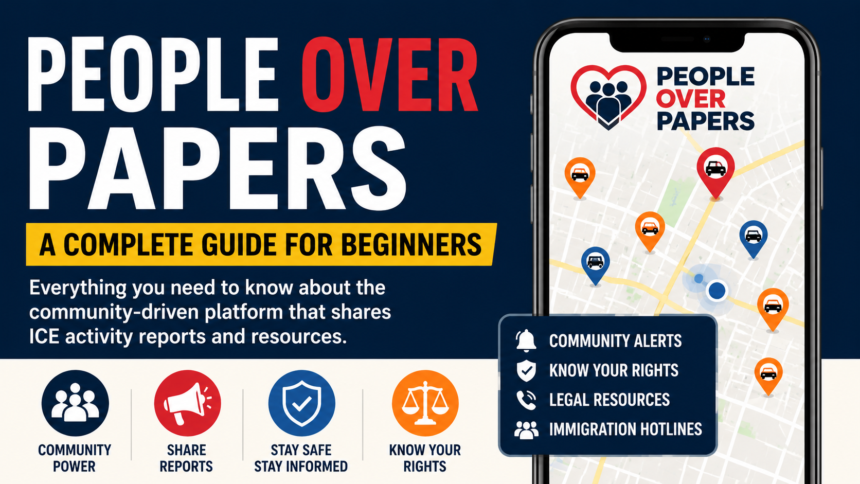
People over papers means valuing human experiences, relationships, and individual needs more than documents, paperwork, or bureaucracy. Whether in healthcare, education, business, or government services, this approach encourages organizations to focus on helping people first instead of getting stuck in unnecessary forms, policies, or administrative procedures.
In today’s fast-moving world, many organizations are shifting toward a people-first mindset because it creates better experiences, builds trust, and improves outcomes for everyone involved.
What Does “People Over Papers” Mean?
The phrase people over papers is built around a simple but powerful idea:
People matter more than paperwork.
Documents, forms, and policies exist for important reasons. They help organizations stay organized, meet legal requirements, and maintain accurate records. However, paperwork should never become more important than the individuals those systems are designed to serve.
For example:

- A hospital should prioritize patient care while completing necessary documentation.
- A school should focus on student learning instead of excessive administrative tasks.
- A business should provide excellent customer service rather than making customers struggle through endless paperwork.
The goal isn’t to eliminate documentation—it’s to make sure paperwork supports people instead of controlling them.
Why Is People Over Papers Becoming More Important?
Technology has changed how organizations operate. Many manual processes are now automated, allowing employees to spend more time helping people instead of filling out forms.
Several factors have increased interest in the people over papers approach:
- Digital transformation
- Better customer expectations
- Faster communication
- Remote work environments
- Improved workflow automation
- Human-centered service design
Modern organizations understand that positive experiences create stronger relationships, better loyalty, and improved long-term success.
The Core Principles of People Over Papers
Understanding the main principles makes it easier to apply this philosophy in everyday life.
1. Put People First
Every decision should consider how it affects real people.
Instead of asking:
“What documents are required?”
Ask:
“How can we best help this person?”
This small shift often leads to better solutions.
2. Simplify Processes
Complicated paperwork creates frustration.
Organizations following the people over papers philosophy aim to:
- Reduce unnecessary forms
- Eliminate duplicate information
- Use digital systems
- Speed up approvals
- Make instructions easier to understand
Simple processes save time for both employees and customers.
3. Show Empathy
Rules are necessary, but compassion is equally important.
Employees should understand individual circumstances and offer reasonable support whenever possible.
Empathy helps create positive experiences without sacrificing professionalism.
4. Build Trust
People appreciate transparency.
Organizations that communicate honestly and explain procedures clearly earn greater trust from customers, patients, students, and employees.
Trust is often more valuable than perfect paperwork.
Benefits of Choosing People Over Papers
Adopting this philosophy offers advantages across many industries.
Better Customer Experience
Customers prefer businesses that solve problems quickly.
Instead of requesting multiple documents repeatedly, organizations can streamline verification and focus on finding solutions.
Happy customers often become loyal customers.
Improved Employee Satisfaction
Employees usually dislike spending excessive time on administrative work.
Reducing paperwork allows them to focus on meaningful tasks such as:
- Helping customers
- Solving problems
- Building relationships
- Improving services
This often leads to higher job satisfaction.
Faster Decision Making
Less bureaucracy means faster responses.
Whether approving applications, processing requests, or resolving complaints, fewer administrative barriers reduce delays.
Stronger Relationships
People remember how they were treated.
Organizations that value kindness, respect, and understanding build stronger long-term relationships with clients and communities.
Increased Productivity
Automated systems and simplified workflows reduce repetitive administrative work.
Employees can spend more time creating value instead of managing paperwork.
Examples of People Over Papers
Let’s explore how this philosophy works in real life.
Healthcare
Doctors and nurses often spend hours completing documentation.
Hospitals that embrace people over papers invest in digital record systems and better technology so medical professionals can spend more time caring for patients.
Patient care remains the highest priority.
Education
Teachers frequently handle grading, reports, attendance records, and administrative paperwork.
Schools adopting this approach simplify reporting systems, allowing teachers to focus on teaching and supporting students.
Students receive more attention while administrative work becomes easier.
Business
A customer contacts customer support after losing important documents.
Instead of refusing assistance immediately, the company explores alternative ways to verify identity and resolve the issue.
This creates a much better customer experience.
Government Services
Government offices often require multiple documents for applications.
Modern agencies increasingly use online databases, digital verification, and electronic records to reduce paperwork while maintaining security.
Citizens benefit from faster services.
Challenges of Implementing People Over Papers
Although the philosophy sounds simple, implementation can be difficult.
Legal Requirements
Certain industries must maintain detailed documentation because of laws and regulations.
Healthcare, banking, and legal services cannot eliminate paperwork entirely.
The challenge is finding balance.
Risk Management
Documentation protects both organizations and customers.
Without proper records, misunderstandings and legal disputes become more likely.
Good documentation still matters.
Resistance to Change
Some organizations have used the same administrative processes for decades.
Changing workflows requires:
- Staff training
- Technology upgrades
- Leadership support
- Continuous improvement
Transformation takes time.
Technology Costs
Digital systems often require investment.
Organizations may need to purchase:
- Management software
- Cloud storage
- Digital signature tools
- Automation platforms
Although initial costs can be high, long-term savings are often significant.
How Businesses Can Apply People Over Papers
Businesses can begin with small improvements.
Review Existing Processes
Ask questions like:
- Is this form necessary?
- Are customers entering duplicate information?
- Can automation reduce manual work?
Small improvements quickly add up.
Use Digital Solutions
Electronic forms, online portals, and cloud-based systems reduce paperwork dramatically.
Customers appreciate faster and more convenient services.
Train Employees
Employees should understand that policies exist to support people—not create unnecessary obstacles.
Training should emphasize:
- Communication
- Empathy
- Problem-solving
- Flexibility
- Customer care
Listen to Feedback
Customers often identify unnecessary complexity.
Regular feedback helps organizations improve their processes continuously.
People Over Papers in the Digital Age
Artificial intelligence, automation, and cloud technology are making paperwork easier than ever.
Instead of replacing people, technology should remove repetitive administrative work.
Examples include:
- Online document verification
- Electronic signatures
- Automated appointment scheduling
- AI-powered customer support
- Digital identity verification
These tools allow employees to spend more time helping people.
Common Misunderstandings About People Over Papers
Some people misunderstand this concept.
Myth 1: Documentation Doesn’t Matter
False.
Documentation remains essential for legal compliance, accountability, and accurate records.
The goal is balanced documentation—not eliminating it.
Myth 2: Rules Should Be Ignored
Incorrect.
Policies still matter.
However, organizations should apply them thoughtfully while considering individual circumstances whenever appropriate.
Myth 3: It’s Only for Large Organizations
Not true.
Small businesses, nonprofits, schools, clinics, and even freelancers can adopt a people-first approach.
Every organization can improve customer experiences.
Tips for Individuals
You don’t need to manage a large company to embrace people over papers.
You can:
- Communicate clearly.
- Show empathy.
- Respect people’s time.
- Reduce unnecessary complexity.
- Focus on solving problems instead of creating them.
- Build relationships through trust and kindness.
These habits improve both personal and professional interactions.
The Future of People Over Papers
As technology continues to automate administrative work, organizations will likely become even more people-focused.
Future trends include:
- AI-assisted workflows
- Paperless offices
- Digital identity systems
- Faster customer support
- Personalized services
- Human-centered design
Organizations that prioritize people while using technology wisely will likely gain stronger reputations and higher customer satisfaction.
Conclusion
The people over papers philosophy reminds us that paperwork should support people—not stand in their way. Documents, policies, and administrative systems remain important, but they should never replace empathy, understanding, and meaningful human interaction.
Whether you’re running a business, working in healthcare, teaching students, or providing customer service, putting people first leads to stronger relationships, better experiences, and greater long-term success. By simplifying processes, embracing technology, and focusing on real human needs, organizations can create services that are both efficient and compassionate.
Ultimately, choosing people over papers is about finding the right balance between necessary documentation and genuine care for the people those systems are designed to serve.