


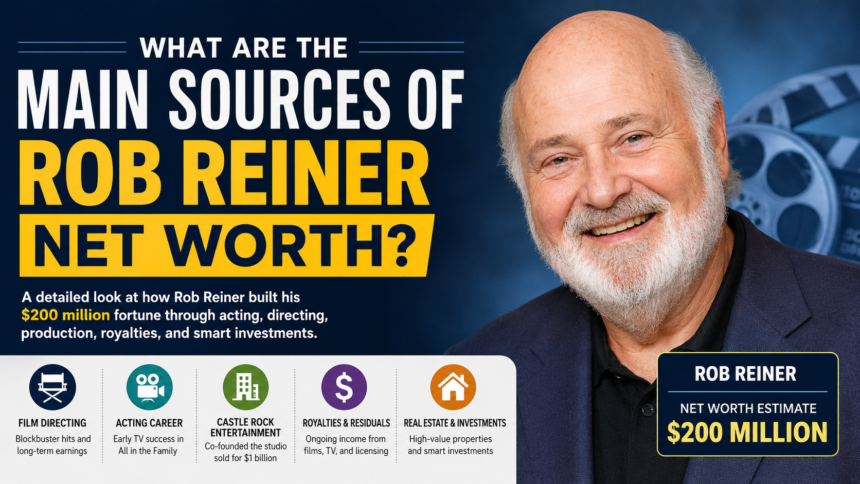
Rob Reiner net worth is widely estimated at around $200 million, built through decades of work in Hollywood as an actor, director, and producer. His wealth comes from multiple income streams, not just one successful career phase. Over time, he expanded from television acting into directing blockbuster films, then into production business ownership, and later into long-term royalty-based income and real estate investments.
Below is a detailed breakdown of the main sources behind his wealth and how each contributed to building his fortune.
Early Acting Career and Television Earnings
Rob Reiner’s early career played a crucial role in shaping his financial foundation. His breakout role came from the legendary sitcom All in the Family, where he played Michael “Meathead” Stivic. This show became one of the most influential sitcoms in American television history.
Although television salaries in that era were not as high as modern streaming-era contracts, the show’s success gave him steady income and national fame. More importantly, it positioned him as a serious talent in Hollywood. Winning Emmy Awards also increased his industry reputation, which later helped him command higher pay in directing roles.
What makes this stage important for Rob Reiner net worth is not just the money earned at the time, but the career transition it enabled. Many actors remain stuck in television roles, but Reiner used it as a stepping stone. After gaining recognition, he shifted toward directing, which would become his primary wealth driver.

His early earnings also helped him build industry connections. These relationships later allowed him to work with top writers, actors, and producers, which increased the commercial success of his future projects.
Directing Blockbuster Films and Hollywood Success
A major portion of Rob Reiner net worth comes from his success as a film director. He became one of the most respected directors of the 1980s and 1990s, a period often considered a golden era for Hollywood storytelling.
He directed several films that became both critical and commercial successes:
- Stand by Me (a coming-of-age classic)
- The Princess Bride (a fantasy-romance cult masterpiece)
- When Harry Met Sally… (one of the most iconic romantic comedies ever made)
- Misery (a psychological thriller that received major awards recognition)
Each of these films contributed to his income in multiple ways. Directors earn upfront fees, but they can also negotiate backend deals, meaning they earn a percentage of box office profits or long-term revenue streams. As his reputation grew, Reiner gained stronger negotiating power, allowing him to earn more per project.
Beyond initial release earnings, these films continue to generate revenue decades later. Platforms like Netflix, Amazon Prime, and cable television frequently license these titles, adding to long-term earnings.
Another important factor is cultural longevity. Films like The Princess Bride and When Harry Met Sally… are not just movies; they are recurring cultural references. This constant relevance ensures continued demand and long-term financial returns, which significantly supports Rob Reiner net worth even today.
Castle Rock Entertainment and Business Expansion
One of the most powerful contributors to Rob Reiner net worth is Castle Rock Entertainment, the production company he co-founded.
Castle Rock quickly became one of Hollywood’s most successful independent studios. It was responsible for producing a wide range of hit films and television projects. One of its most notable contributions to pop culture was its involvement in producing Seinfeld, one of the most profitable sitcoms in television history.
The company’s success was not just based on one project. It built a strong library of films and shows that continued to generate revenue for years. This type of content ownership is extremely valuable because media libraries can be licensed repeatedly across different platforms.
In the early 1990s, Castle Rock Entertainment was sold to Turner Broadcasting, a major industry deal that generated significant financial returns. That acquisition later became part of a larger media ecosystem under WarnerMedia, increasing the long-term value of the content library.
This business move was extremely important for Rob Reiner net worth because it shifted him from being just a creative professional to a media business stakeholder. Owning and selling intellectual property is one of the most effective ways to build long-term wealth in Hollywood.
Royalties, Residuals, and Ongoing Income Streams
Another major pillar of Rob Reiner net worth is passive income from royalties and residuals. Unlike one-time salaries, these payments continue for decades after a film or show is released.
In Hollywood, content generates income through multiple channels:
- Streaming platforms like Netflix and Hulu
- Television reruns and syndication
- International broadcasting rights
- Digital rentals and purchases
- Physical media licensing
Movies such as The Princess Bride and When Harry Met Sally… continue to be streamed globally. Every time these films are watched through licensed platforms, revenue is generated and distributed to rights holders.
Television work from earlier decades also contributes through residual payments. Although individual payments may be smaller compared to modern contracts, the consistency and longevity of these earnings create a stable financial base.
Another major advantage is that classic films often experience renewed popularity due to anniversaries, memes, or social media trends. This modern digital exposure brings older films back into circulation, increasing their earning potential again.
Over time, these combined income streams create financial stability that does not rely on active work. This is a key reason Rob Reiner net worth remains strong even without constant new releases.
Real Estate Holdings and Financial Investments
Real estate is another important component of Rob Reiner net worth. Like many successful Hollywood figures, he has invested in high-value properties in premium California locations.
He has owned properties in areas such as Malibu and Brentwood, both of which are among the most expensive real estate markets in the United States. These areas are known for long-term appreciation due to limited supply, high demand, and elite neighborhood status.
Real estate investments in these regions are not just lifestyle choices but also financial strategies. Property values in Malibu, for example, have historically increased over time due to oceanfront demand and exclusivity. Similarly, Brentwood remains a highly desirable residential area for celebrities and business executives.
In addition to personal homes, high-net-worth individuals often benefit from real estate appreciation over decades. Even without selling, property value increases contribute to overall net worth growth on paper.
Although full investment details are private, it is common for Hollywood figures like Reiner to diversify wealth through stocks, private funds, and entertainment-related investments. This diversification helps protect wealth from industry fluctuations.
Conclusion
Rob Reiner net worth, estimated at around $200 million, is the result of a long and diverse career in entertainment. His wealth is built through early television success, legendary film directing, a major production company deal, ongoing royalties, and valuable real estate investments. Instead of relying on a single income source, he built a multi-layered financial portfolio that continues generating value decades later.
FAQs
1. What is Rob Reiner net worth today?
Rob Reiner net worth is widely estimated at around $200 million, based on industry reports and financial analyses.
2. What is the biggest source of Rob Reiner’s wealth?
His biggest sources are film directing, royalties from classic movies, and his business success with Castle Rock Entertainment.
3. Does Rob Reiner still earn money from old movies?
Yes, he earns ongoing royalties and residuals from streaming platforms, TV broadcasts, and licensing deals.
4. Why is Rob Reiner net worth so high?
His net worth is high because he combined creative success with smart business decisions and long-term media ownership.