


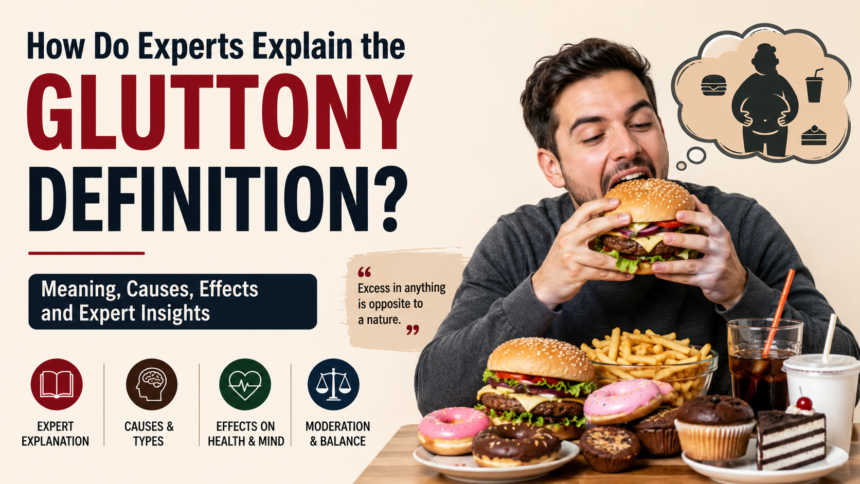
Gluttony is defined by experts as the habit of consuming food or drink in extreme excess, beyond what the body needs. In simple terms, the gluttony definition refers to lack of control over eating or drinking habits. Dictionaries and scholars describe it as overindulgence that ignores moderation and balance. In modern psychology and ethics, it is also seen as a behavior linked to impulse control issues and unhealthy consumption patterns. Today, the term is not only used for food but can also describe excessive desire for anything, such as wealth, entertainment, or material goods.
Fast Info Table
| Topic | Details |
|---|---|
| Keyword | gluttony definition |
| Meaning | Excessive eating or drinking beyond normal needs |
| Origin | Latin “gluttire” meaning “to swallow” |
| Category | Moral behavior / psychology / religion |
| Type | Noun |
| Modern Use | Can also mean overindulgence in anything |
| Related Concept | One of the Seven Deadly Sins |
What Experts Say About the Meaning of Gluttony
Experts from dictionaries and ethical studies agree that gluttony definition is not just about eating too much. It is about persistent overconsumption without self-restraint. Traditionally, religious scholars describe it as one of the Seven Deadly Sins, highlighting its moral consequences.
From a linguistic point of view, the term comes from Latin “gluttire,” which means “to swallow.” This origin helps explain why the word is closely tied to uncontrolled intake. Modern experts expand this meaning to include behavior patterns where individuals repeatedly exceed healthy limits, even when they are aware of the consequences.
Common Causes and Types of Gluttony
Experts explain several reasons behind gluttonous behavior. One major cause is emotional eating, where people consume food to deal with stress, sadness, or boredom. Another cause is environmental influence, such as easy access to fast food or oversized portions.
There are also different forms of gluttony recognized in modern studies:
- Physical gluttony: Overeating food or drinking excessively
- Emotional gluttony: Eating driven by feelings rather than hunger
- Material gluttony: Overconsumption of money, goods, or luxury items
- Digital gluttony: Excessive use of social media or entertainment content
Each type shows a lack of balance and self-control in different areas of life.
Effects and Real-Life Implications of Gluttony
The effects of gluttony can be both physical and psychological. Health experts warn that overeating can lead to obesity, heart disease, diabetes, and digestive problems. It also affects energy levels and overall well-being.
Psychologically, gluttony is linked to guilt, loss of self-control, and low self-esteem. People may feel trapped in a cycle of overindulgence and regret. Socially, it can also affect lifestyle habits, leading to reduced productivity and poor discipline.
Beyond health, the broader interpretation of gluttony highlights a growing concern in modern society: overconsumption. Experts point out that excessive consumption of resources contributes to environmental strain and unsustainable living patterns.
Conclusion and FAQs
In summary, the gluttony definition refers to excessive and uncontrolled consumption, especially of food and drink, but it can also extend to any form of overindulgence. Experts describe it as a lack of moderation that affects physical health, emotional balance, and even lifestyle choices. Understanding this concept helps people become more aware of their habits and make healthier decisions.
FAQs
1. What is the simple gluttony definition?
It means eating or drinking more than the body needs in an uncontrolled way.
2. Is gluttony only related to food?
No, it can also refer to overconsumption of anything, including money or entertainment.
3. Why is gluttony considered a problem?
Because it can lead to health issues, poor self-control, and unhealthy habits.
4. Is gluttony still relevant today?
Yes, experts say it applies to modern issues like overeating and overconsumption in daily life.